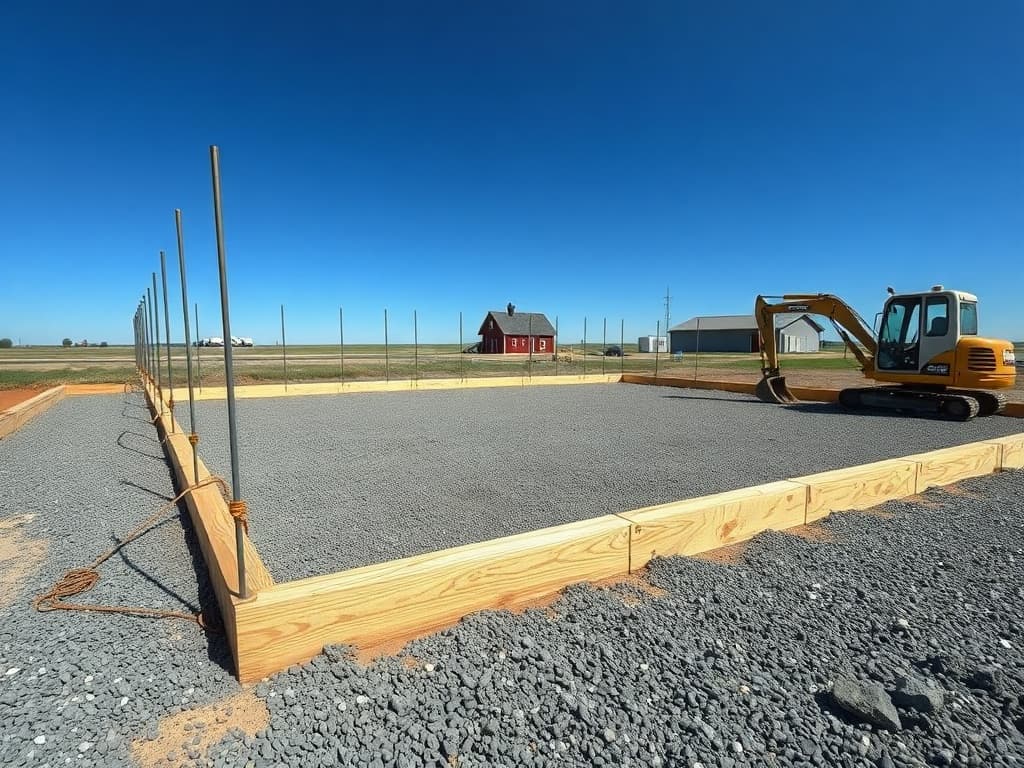
Rural concrete · Central Alberta
Concrete built for the land you work.
Shop foundations. Grain bin pads. Silage bases. Feed pads. Quonset floors. Acreage driveways. Cattle handling area concrete. Poured right so it holds up to Alberta winters, freeze-thaw, and the machinery you actually run.
10+
Years pouring concrete
★ 5.0
Google rating
13
Central AB towns served
Why call us instead of the city guys
We show up on country roads.
Most concrete contractors work city subdivisions and driveways. They won’t drive out to your acreage west of Ponoka or south of Innisfail. We do — because we live here. We know rural site access, we know Alberta frost depth, we know how to spec a shop pad that’ll take a loaded combine without cracking.
We come look at your site first — free, no pressure. We look at access, grade, drainage, existing conditions. Then you get an honest number in writing. No surprise upcharges when the truck arrives.
This page is for farm operators, acreage owners, and rural homeowners across Central Alberta — whether you’re pouring a grain bin foundation, a farm shop slab, a silage pit, or just a long acreage driveway. If it’s concrete and it’s out in the country, we pour it.
What we pour
Every kind of rural concrete.
01
Shop foundations
40×60, 50×80, custom sizes. Proper rebar, thickness sized for the machinery going in. Frost footings poured to Alberta depth.
Full shop foundation specs →02
Grain bin pads
3,000 to 15,000+ bushel bins. Sized to bin manufacturer spec. Compacted base, proper thickness, level for accurate weigh-outs.
Grain bin pad specs by bushel →03
Silage bases & bunkers
Drive-over silage pads, bunker floors, feed alleys. Sealed joints, proper grade for drainage, built to hold up to skid-steer traffic and acid from silage.
04
Feed pads & handling areas
Cattle handling systems, calf shelter pads, water bowl pads, feed bunk pads. Rough finish for cow traction, drainage sloped away from feed areas.
05
Quonset & outbuilding floors
Quonset floors, drive-shed pads, cold-storage floors, workshop pads. Sized and speced to whatever you're running through the door.
06
Poultry & livestock barn floors
Chicken barn and poultry barn floor slabs, hog barn floors, curbs and footings for pole-frame livestock buildings. Sloped and jointed for washdown and manure handling.
07
Acreage driveways & aprons
Long acreage driveways, garage aprons, RV pads, machinery parking pads. Reinforced for actual rural use, not just cars.
Acreage concrete page →Central Alberta rural specifics
What we think about that city guys don’t.
Frost depth. Alberta frost goes 4-6+ feet down depending on winter and soil. Footings and foundations that don’t reach below frost heave every spring and crack. We pour deep.
Drainage. Rural sites usually don’t have municipal drainage. Grade matters. If the pad sits in a puddle every spring, the freeze-thaw destroys it in a few winters. We shape the pour and the subgrade so water moves off.
Access & truck reach. Concrete trucks have limits — how far they can back in, how heavy they can be loaded, whether they can safely turn around. Long acreage driveways sometimes need a pumper truck. We know when to spec one.
Loading & use. A grain bin pad has different load than a driveway. A silage bunker has different chemistry than a shop floor. We match the concrete mix and rebar spec to what you’re actually doing on it.
Reinforcement & thickness. As a starting point: a light hobby shop runs around 5″ of concrete with wire mesh or light rebar; a standard farm shop holding pickups and tractors runs 6″ with #4 rebar on 16–18″ centres; a heavy machinery shop for combines or bigger tractors runs 6–8″ with a heavier #5 rebar grid. Every number here is a starting point, not a spec — the actual thickness and reinforcement for your pour gets set once we’ve seen the site, the soil, and what’s going on it. See our full shop foundation thickness guide for the detail.
Weather windows. Central Alberta gives us maybe 6-7 pouring months a year. We book weather windows tightly and don’t pour in temperatures that’ll compromise the cure.
Permits. In Alberta, any shop or accessory building over 10 square metres (about 108 sq ft) typically needs a Development Permit and a Building Permit through your local municipality, and the foundation gets inspected before the pour. We work with whatever permits are in place and coordinate around the inspector’s schedule — we don’t pull permits or provide engineering ourselves, so for anything requiring a stamped design, you’ll want an engineer or designer involved alongside us. More on this in our concrete FAQ.
How we work
Simple. No surprises.
01
Call or text
Tell us what you're pouring, how big, and where. A photo helps.
02
We drive out
Free site visit. We look at access, grade, prep needs. No pressure.
03
Written quote
Real number in writing. What it costs is what you pay. No surprises.
04
We pour it right
Proper prep, right rebar, right mix, right thickness. Built to last.
Common questions
What Central Alberta farmers ask us most.
Do you pour concrete out on acreages and farm sites?
+
Yes. We're based in Innisfail and drive out across Central Alberta — Red Deer County, Ponoka County, Lacombe County, Mountain View County, Rocky Mountain House area. If the truck can get in, we can pour. We'll come look before quoting so we know exactly what the access, grade, and prep look like.
What thickness should a shop foundation be for a 40x60 shop in Alberta?
+
Depends on what's going in the shop. For a shop that'll hold tractors, combines, or heavy machinery, we typically pour 6 inches of concrete with proper rebar and mesh, on a well-compacted gravel base with drainage. For lighter use (workshop, storage), 5 inches can be enough. Frost footings go below Alberta frost depth. We'll spec it right when we come look.
Can you pour concrete when the road to my acreage is muddy?
+
Sometimes yes, sometimes no — depends on how bad the road is and whether the concrete truck can safely get in without getting stuck. We'll come look at the access before we schedule the pour. If the road is a problem, we'll suggest waiting or bringing gravel in first. Nobody wants a stuck concrete truck.
Do you build grain bin pads?
+
Yes. Grain bin pads need proper prep — level compacted base, correct diameter, correct thickness for the bin size and load. We've poured pads for bins from 3,000 to 15,000+ bushels. Tell us the bin manufacturer and model when you call and we'll pour to their spec.
Can you do silage bases and feed pads?
+
Yes. Silage bunker floors, drive-over silage pads, feed alley floors, calf shelter pads. Cattle operations have specific concrete needs — proper drainage, correct grade, sealed joints so silage doesn't seep. We'll spec it based on what you're feeding and how many head you're running.
How long does a shop foundation take from start to pouring?
+
Usually 1-3 weeks from signed contract to poured concrete, depending on excavation, weather, and truck availability. Actual pour day is typically one day (or two days for larger jobs). Concrete cures for at least 7 days before you can drive heavy machinery on it, 28 days for full strength.
Do you pour floors for chicken barns and other poultry or livestock buildings?
+
Yes. Poultry barn and chicken barn floors need to be sloped and jointed correctly for washdown and manure handling, with curbs and footings sized to the pole-frame building going up around them. Same goes for hog barns and other livestock buildings. Tell us the building dimensions and what it's for and we'll spec the slab to match.
Do I need a permit for a farm shop or accessory building in Central Alberta?
+
Usually yes. Any shop or accessory building over 10 square metres (about 108 sq ft) in Alberta typically requires a Development Permit and a Building Permit through your local municipality, and the foundation is inspected before the pour. We work with the permits in place and coordinate with the inspector so the pour goes ahead on schedule — we don't pull permits or provide engineering ourselves.
What's the difference between a grain bin pad and a shop foundation?
+
Load and shape, mainly. A grain bin pad is round or sized to the bin's exact diameter, carries a very heavy but evenly distributed load (a full 4,000-bushel bin can weigh 100+ tons), and needs to stay level for accurate weigh-outs. A shop foundation is rectangular, carries point loads from vehicles and equipment plus the building itself, and needs frost footings below Alberta frost depth around the perimeter. Different prep, different rebar pattern, different spec.
Ready to pour?
Come look at your site. Free.
Every concrete job is different. The only way to know what yours costs is to walk it. Call Fabien or text a photo of the site — we’ll come out.